


Megaliths of Carnac and the Morbihan riverbanks listed by UNESCO
The megaliths of Carnac and the banks of the Morbihan have been officially listed as aUNESCO World Heritage Site since July 12, 2025.
Welcome to an exceptional territory of over 1,000km² populated by thousands of stones spread over more than 550 megalithic sites in 28 communes of southern Morbihan. Carnac and its 3,000 menhirs, Locmariaquer and its great broken menhir, Erdeven and its stone giants... countless tumuli, alignments and other dolmens have marked the landscape of Quiberon Bay for 7,000 years. Discover them all on foot or by bike. The illustrated map of the megaliths of Carnac and the shores of the Morbihan is available free of charge from tourist offices.
The shores of the Morbihan represent an exceptional area, unique in the world, characterized by an inordinate concentration and diversity of megalithic sites in relation to the maritime landscape. Since 2012, the Paysages de Mégalithes association has been working with local stakeholders on a collective project: the UNESCO World Heritage listing of the Carnac megaliths and the Morbihan riverbanks. This is the first World Heritage site in Brittany.
Why a UNESCO World Heritage listing?
The UNESCO World Heritage List is made up of cultural and/or natural sites of exceptional interest and value to humanity.
The aim of this listing is to preserve, enhance and protect this age-old heritage and pass it on to future generations. To find out more, watch the video produced by the Paysages de Mégalithes association, and discover the lexicon of megalithism.
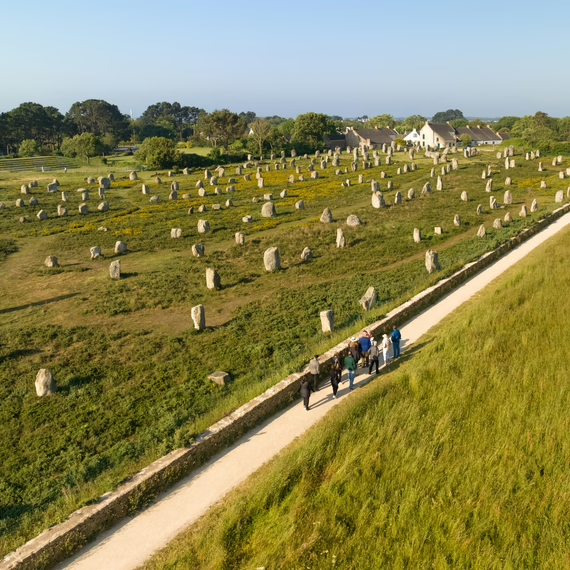
The megaliths of Carnac and the Morbihan riverbanks
The Neolithic period, 7,000 years ago
The last period of prehistory, the Neolithic is a key period in the history of mankind. First villages, cultivation of cereals, animal husbandry... An organized, hierarchical society took shape, and megalithic constructions bear witness to the exceptional technical skills and ingenuity of these peoples.
More than 550 megalithic sites comprising some ten thousand monuments in the Morbihan department: the Carnac alignments, the Gavrinis cairn, the Grand Menhir brisé at Locmariaquer...
An area of over 1,000 km² stretching from the Rivière d'Étel to the Rhuys peninsula, via the Bay of Quiberon and the Gulf of Morbihan near Vannes, in western France.
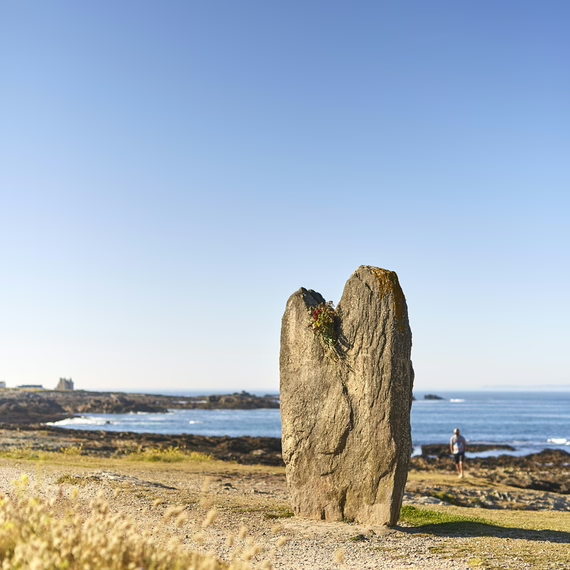
A unique territory in the world
The inscription of the Sud Morbihan megaliths on the UNESCO World Heritage List is based on 5 attributes that define its outstanding universal value:
A concentration of menhirs (alone, in alignments or in enclosures) unequalled anywhere in the world on a limited territory
An extraordinary density of tombs (dolmens and tumuli)
An unrivalled diversity and abundance of engravings
An unprecedented accumulation ofpolished objects in rare materials of distant origins
All this in a coastal landscape, the founding and defining feature of this unique dossier.
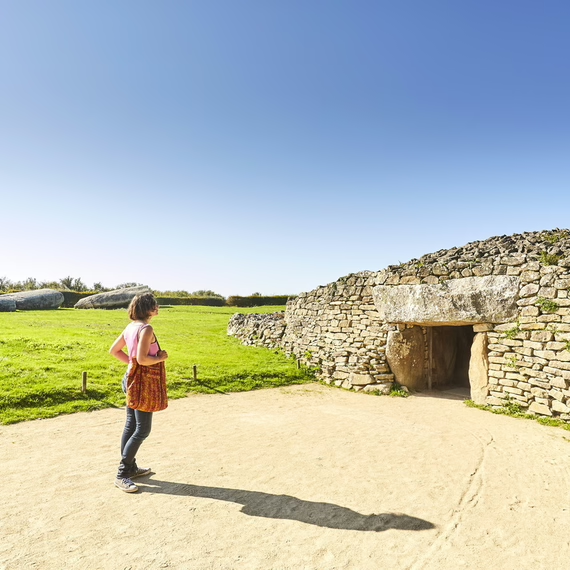
Key dates in the UNESCO nomination process
Since 2012: Mobilization of local players and the 28 communes around the candidacy
End 2023: Submission of application to the French government
July 12, 2025: Deliberation by the World Heritage Committee. Inscription on the UNESCO World Heritage List.
Best practices
When you think of the world's unique heritage, you think of preserving this exceptional treasure. Here are the best ways to protect these ancestral monuments:
- Climbing is better in the mountains! Fragile (and very, very heavy), megaliths deserve to be admired with your feet firmly on the ground, for your own safety and that of the site.
- We know that these stones, some of them engraved, are tempting... but it's best to admire them without touching them! A simple touch can weaken them or erase clues for archaeologists.
- Megaliths love their natural setting, so please stay on the path to avoid trampling, and take your garbage with you.
For further information, please contact our tourist offices .