

Fishing in Quiberon Bay: the complete guide, from the beach to the open sea

Quiberon Bay is a renowned seaside destination, but it is also a marine ecosystem of exceptional richness. In May, as nature awakens and the high spring tides reveal vast stretches of the intertidal zone, it’s the perfect time to discover or rediscover the joys of fishing.
In this comprehensive guide, we provide all the information you need to choose your type of fishing, fish under the right conditions, stay safe, and respect this fragile environment. We also highlight our local partners who can guide you and share their passion for the sea.
Offshore Fishing: Embark on an Adventure in Quiberon Bay
For the more adventurous, offshore fishing promises an exhilarating experience! Leaving the coast behind and heading toward the horizon is a unique escape in the middle of the ocean. Whether you’re an experienced angler or this is your very first trip out to sea, the excitement is always the same as you leave the harbor.
Accompanied by professional guides, you’ll set out to catch some impressive fish, such as large sea bass, pollock, or tuna for the more adventurous. It’s the perfect opportunity to discover Quiberon Bay from a different perspective, breathe in the fresh sea air, and—with a little luck—spot some dolphins along the way!
The Professional Fishing Guides of Quiberon Bay
The Bay’s professional fishing guides are all certified and share their passion for the sea and for fishing:
Feeling Pêche Quiberon
Pesk’Anim
Quiberon Fishing
Vincent JC
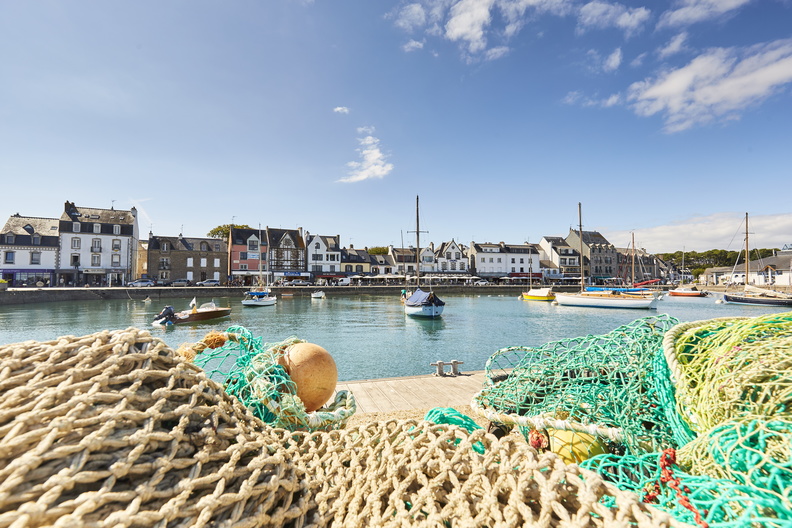
New Regulations for 2026
Starting in February 2026, if you’re planning a fishing trip at sea (alone or with a guide) to catch sea bass, pollock, red sea bream, or bluefin tuna, registration is now mandatory for anyone over 16 years of age.
Before boarding, download the RecFishing app. Registration is free, valid for 12 months, and allows you to report your catch (even if you release the fish). It’s a responsible action to help preserve our fish stocks in Quiberon Bay!
Download the informational flyer
What fish can you catch in Quiberon Bay?
Depending on the technique you choose and the season, the species vary.
Here are the main species you’re likely to encounter:
- European sea bass: it comes close to shore to hunt in the surf or near oyster beds
- gilthead sea bream: it arrives as the water warms in the spring and summer; it loves shellfish
- grey sea bream: it can be caught from the shore using marine worms
- Mackerel: It often arrives in schools in late spring. You can spot it by the birds diving above the water
- the wrasse: a fish that lives among seaweed and rocks
- Mullet: Very common in harbors, it’s often caught using small shrimp as bait. It’s a wary but very powerful fish
- Sole and flounder: They burrow into the sand on beaches and are caught mainly at night or in rough seas
- ray: sometimes caught while surfcasting on large, fine-sand beaches
- pollock: Starting in 2026, regulations will prohibit catching pollock (even from shore) between January 1 and April 30
Warning! Marking fish (cutting the tail) is mandatory immediately upon capture for certain species to combat illegal resale. Always carry a small pair of scissors! Find out which species are covered by this regulation in Morbihan
Beach fishing in Brittany in tune with the tides
Beachcombing is the perfect activity to enjoy a weekend with family, as a couple, or with friends. When the sea recedes hundreds of meters, it reveals a fascinating world teeming with shellfish and crustaceans.
Before you go, be sure to check the weather and the day’s tide times to make the most of your outing.
On which beaches can you go beachcombing in the Bay?
- Port Biren Beach in La Trinité-sur-Mer
- Beaumer Beach in Carnac
- La Falaise Beach in Locmariaquer
- Kerouriec Beach in Erdeven
- Pradic Beach in Etel
On which rocky headlands can you go shore fishing in the Quiberon area?
Kerbihan Point in La Trinité-sur-Mer
Men er Belleg Headland in Saint-Philibert
Conguel Headland in Quiberon
Warning! A biological rest period is in effect in the area from Penthièvre to Baie aux Sables Blancs. All fishing activities are prohibited for an indefinite period.
What shellfish and crustaceans can be found in Quiberon Bay?
On the beaches, you can gather cockles, clams, razor clams, periwinkles, barnacles, shrimp, and even crabs.
As for the rocky headlands, there you’ll find mussels, barnacles, spider crabs, tellina clams, cockles, clams, razor clams, shrimp, razor clams, scallops, and periwinkles.
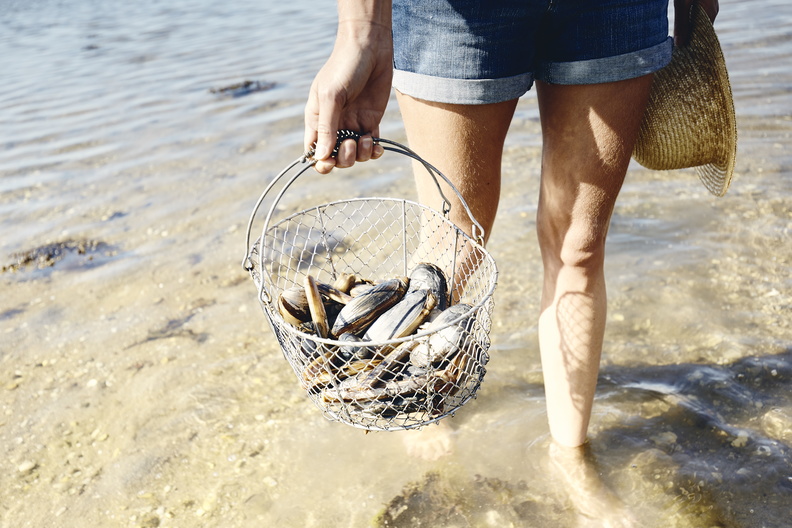
Shellfish gathering that respects Brittany’s biodiversity
Respecting the beaches and rocky headlands
When you turn over a rock, it’s very important to put it back in its original place. You might not always notice it with the naked eye, but many types of seaweed and microorganisms live sheltered from the sun beneath the rocks. Exposing them to the sun means certain death.
Respecting the growth of shellfish
To make sure you don’t collect a shellfish that’s too small, the easiest way is to use a measuring ruler to check that it’s well above the minimum size.
Where can you find a measuring ruler for beachcombing?
- At our tourist information offices
- At fishing supply stores
- As a printable version
- As a downloadable app: Shore Fishing
Learn shore fishing with enthusiasts
To discover the secrets of the intertidal zone and identify different species while respecting the environment, join an introductory outing with our partners:
In Carnac starting in May: https://www.baiedequiberon.bzh/a-voir-a-faire/agenda/decouverte-de-l-estran-et-de-la-peche-a-pied
In La Trinité-sur-Mer starting July 1: https://www.baiedequiberon.bzh/a-voir-a-faire/agenda/initiation-a-la-peche-a-pied-2
More outings may be added over the coming weeks.
Shore Fishing in Brittany
Fishing with a float: the favorite technique for families and seniors
It’s the simplest and most enjoyable technique, particularly well-suited for harbor piers (Port-Haliguen).
Why is float fishing ideal for families?
Fishing with a float is the ultimate lesson in patience! A fishing rod, a pretty colorful float, a little bait—and kids can quickly get started with this rewarding activity. It lets you enjoy quality family time outdoors while keeping the kids happily occupied.
Is float fishing suitable for seniors?
Float fishing is also a perfect activity for seniors. It lets you enjoy the bustling activity of Port-Haliguen—watching boats come and go—while engaging in a pleasant pastime that doesn’t require intense physical effort. Set up your folding chair and enjoy a relaxing moment while breathing in the salty air of Brittany.
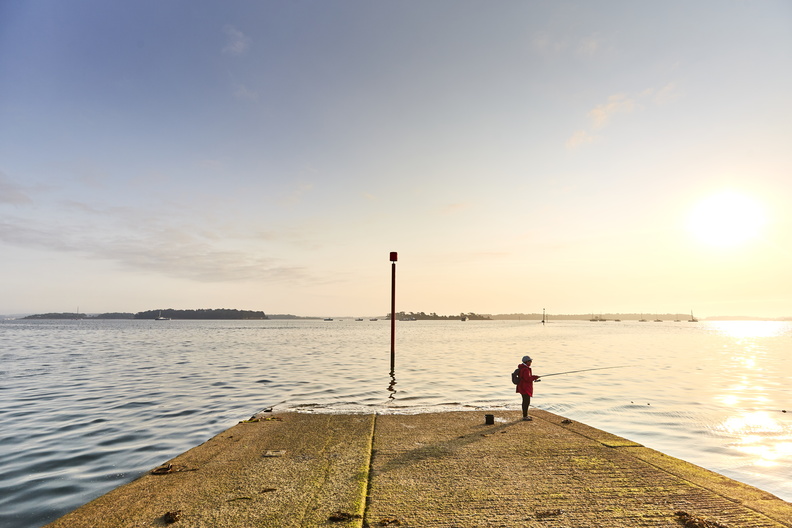
When are the best times to fish?
The best times for shore fishing are often at sunrise and when the tide has finished rising. That’s when the fish are most active.
Surfcasting on the Beach in Brittany
Surfcasting is another form of shore fishing, but this time from the beach. Unlike shore fishing, where you wait for the tide to go out, here you take advantage of the movement of the waves. The idea is to cast your bait far enough out into the water to reach the fish that come to feed near the shore.
It’s a bit more physically demanding than float fishing, but it’s still less tiring on the legs than shore fishing, where you walk for kilometers over slippery rocks.
It’s a perfect activity for those who want a little more excitement without having to take a boat!
Always be mindful of rising tides, especially on beaches with a gentle slope, and respect swimming areas if you’re fishing during the day in the summer.
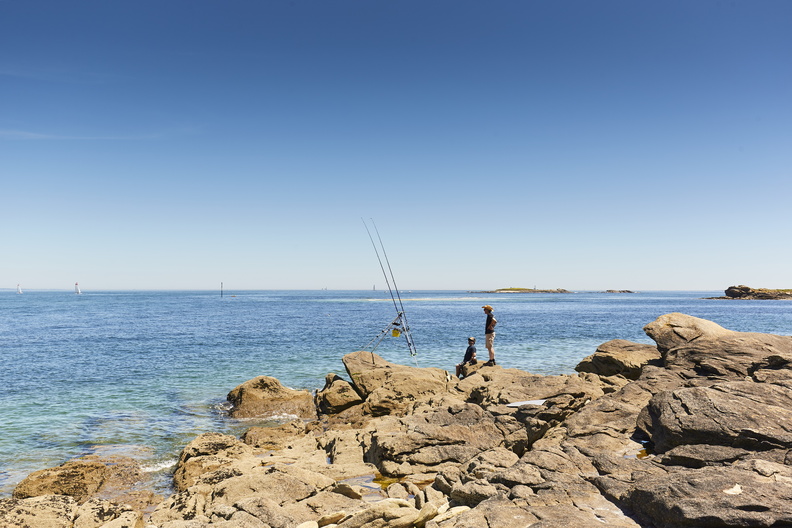
What gear do you need for fishing in Quiberon Bay?
Clothing
In the spring, the weather can sometimes be deceiving. Bright sunshine can mask a chilly breeze. To be prepared for any situation, it’s best to bring several layers of clothing that you can adjust as needed. A waterproof windbreaker is essential to keep you dry and sheltered from the wind.
Boots, waders, or non-slip shoes—depending on your fishing style—will help you avoid slipping and keep you comfortable.
Equipment for shore fishing
- a clean wicker basket or bucket
- a hand rake for scraping sand or mud
- a clam knife
- a landing net
- a measuring stick
- a pair of binoculars if you’d like to watch seabirds at the same time
The ideal gear for float fishing
Here’s a list of gear you’ll need for float fishing, but you can adapt it based on what you already have and start with a more minimalist setup if you’re a beginner.
- A 3.50 m to 4.50 m fishing rod, such as a match rod or a slim telescopic rod. It should be long enough to guide the float effectively but light enough not to tire your arm
- A small reel (size 2500 or 3000) spooled with fairly fine nylon line (20/100 to 25/100)
- pear-shaped or elongated floats weighing 5g to 20g
- split weights to balance the float
- fluorocarbon leaders with hooks sizes 6 to 10, depending on the size of the bait
- Bait: bouquet shrimp, beach worms
- a landing net
- a fishing bucket
- a hook remover to safely remove the hook if the fish has swallowed it a little too deeply
The ideal gear for surfcasting
As with float fishing, we’ve put together this list of recommended gear, but you can adapt it based on what you already have. Keep in mind, however, that your gear must be sturdy enough for surfcasting.
- A 4.20 m to 4.50 m fishing rod capable of casting heavy weights ranging from 100g to 200g. A long rod helps keep your line above the waves to prevent the current from pulling your rig back too quickly
- A large reel (size 7000 to 10,000) with a large line capacity, treated to resist saltwater corrosion
- High-quality nylon line (30/100 to 40/100) is ideal for beginners because it’s elastic and withstands the impact of the waves well
- 100g to 150g sinkers: their shanks anchor into the sand so your line doesn’t drift with the current
- Leaders rigged with 2 or 3 hooks to accommodate different baits
- a tubular rod holder to stick in the sand or a tripod, which is more stable on mixed terrain or if you’re fishing with two rods at the same time
- a fishing backpack to keep your gear dry and protected from sand
- a multi-purpose plier for unhooking fish or cutting your line
- bait: sandworms, shrimp, pieces of crab, cuttlefish, or squid
- a fishing bucket
- a hook remover to safely remove the hook if the fish has swallowed it a bit too deeply
Equipment for offshore fishing
For offshore fishing, all equipment will be provided by your fishing guide.
Essential safety precautions for any type of fishing
The sea is a living environment subject to fluctuations in water quality, particularly after heavy rains or during temperature spikes in early summer.
Before any trip, check the safety status of shellfish in Quiberon Bay.
There are regularly temporary bans related to natural toxins or bacterial contamination. Consuming shellfish from a closed area poses a real health risk!
Fishing in Brittany in 2026: An Ethical and Sustainable Practice
Recreational fishing is part of an approach to environmental conservation.
The No-Kill Policy
Releasing your catch back into the water after taking a souvenir photo is a gesture that ensures the future of sport fishing.
Zero Waste
Abandoned fishing lines are deadly traps for birds. Do not leave anything behind.
Responsible Consumption
It’s important to respect the ocean and to fish and harvest only what you need. This prevents you from discarding fish, shellfish, or crustaceans that were harvested or caught in excess.
Now you know everything you need to enjoy fishing in Quiberon Bay just the way you like it!